About the Pivnyk Foundation
- History
- Author
- Manufacturing Technology
- Maker’s Marks
- Symbol & Meaning
History
Ceramics are one of the oldest materials invented by humankind, dating back to 29–25 thousand BC. There are several types of ceramics:
- Porous ceramics (faience)
- Dense ceramics (porcelain)
- Unglazed ceramics
- Glazed ceramics (majolica)
Majolica refers to crafts made from colored, fired clay. They are covered with a glaze, and then a pattern is applied.
In everyday life, majolica was used both decoratively—vases, figurines, panels, decorative tableware—and functionally, as utilitarian ware. In Ukraine in the 20th century, one of the main producers of ceramics was the Majolica Factory in Vasylkiv.
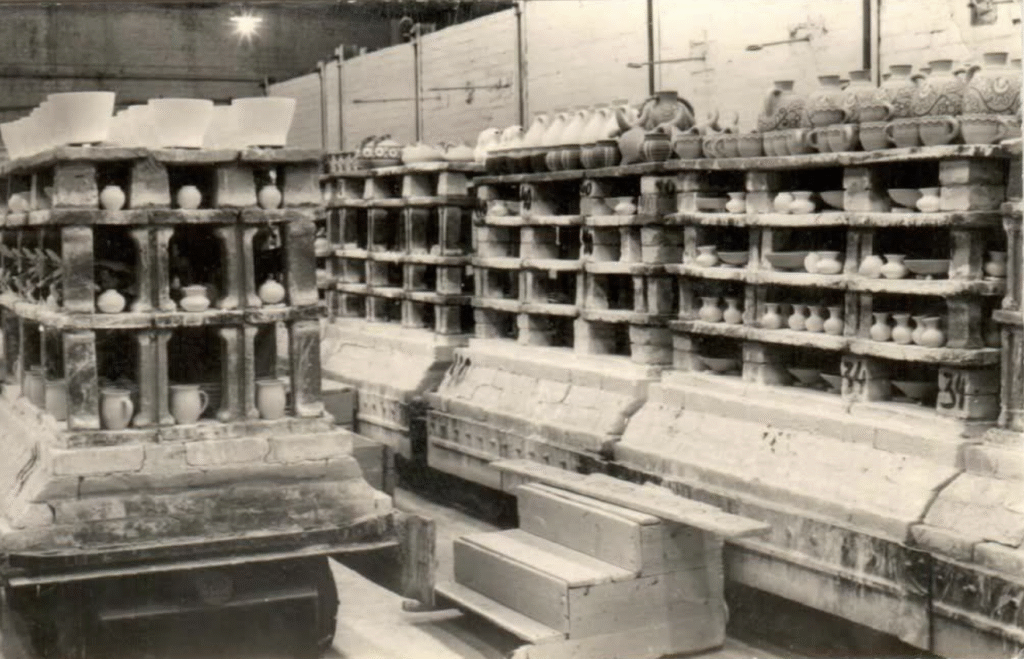
In 1928, sixteen potters united into an artel “Ceramic” under the leadership of Oleksandr Usov in the town of Vasylkiv in Kyiv region. They had ten potter’s wheels and two kilns and they produced simple crafts. In 1931, the production technology was improved.
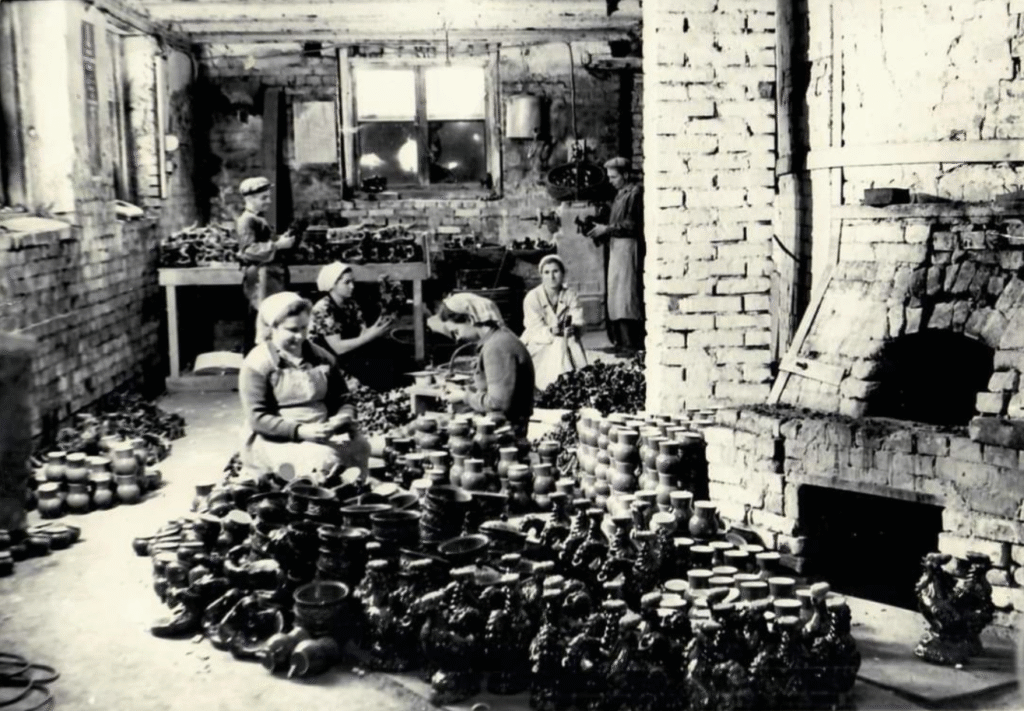
In 1933, only three potters and four painters stayed with the artel. And in 1934, it was reorganized into the Vasylkiv Majolica Factory. n 1943, during the World War II, the factory was partially destroyed. However, in 1946 it started its work again, producing the same items after the war. They were different vases, animal sculptures, decorative plates, milk and brew crockery, bowls, flowerpots and others. The items were decorated in the tradition of Ukrainian folk ceramics.
In 1956, the reconstruction of the factory started. The production process was partially mechanized and new buildings were built transforming the previous factory into a more powerful enterprise, with a new tunnel kiln 80 meters long, molding and stamping shops. The hand-painting was preserved. The 1960s-1980s were the golden times for the Vasylkiv Majolica Factory. Vasylkiv majolica meant quality and artistic value. Thanks to its statuettes, the Vasylkiv majolica items became an important part of home decor at that time. (The possessive form was incorrect but “in those times” is correct. However, I’d go with at that time.
However, in 1992, that began to change. Prices for gas were raised and from the moment the ceramics production became unprofitable. On Oct the 20th, 1988, the Commercial Court of Kyiv Region initiated banсkruptsy procedure against Vasylkiv Majolica Factory. In 2002, the factory was declared bankrupt and was liquidated.

Author of the Rooster
The couple Nadiia and Valerii Protoriev are among the most eminent ceramic artists
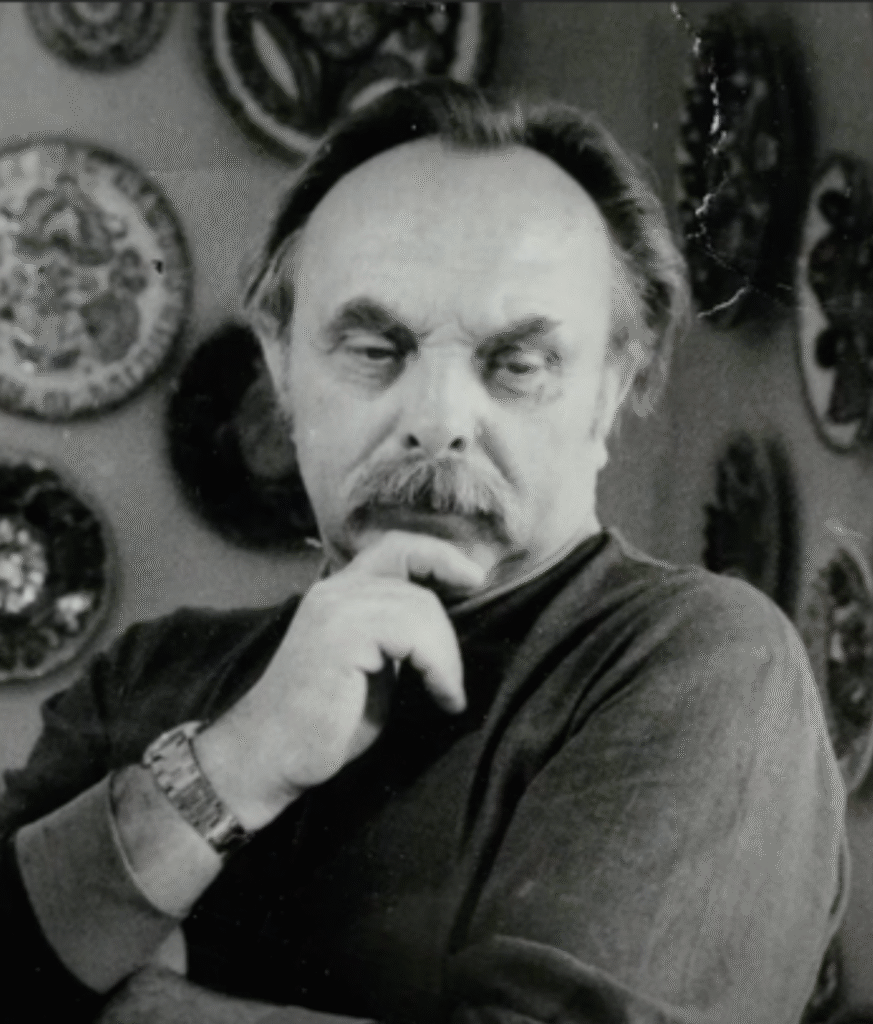
Valerii Semenovych Protoriev was born on January 17, 1924, in the village of Voronivtsi, Vinnytsia Region, in a doctor’s family. His father hoped he would follow in his footsteps, but Valerii was absolutely fascinated by art. In 1945, he got into the Kyiv College of Applied Arts.
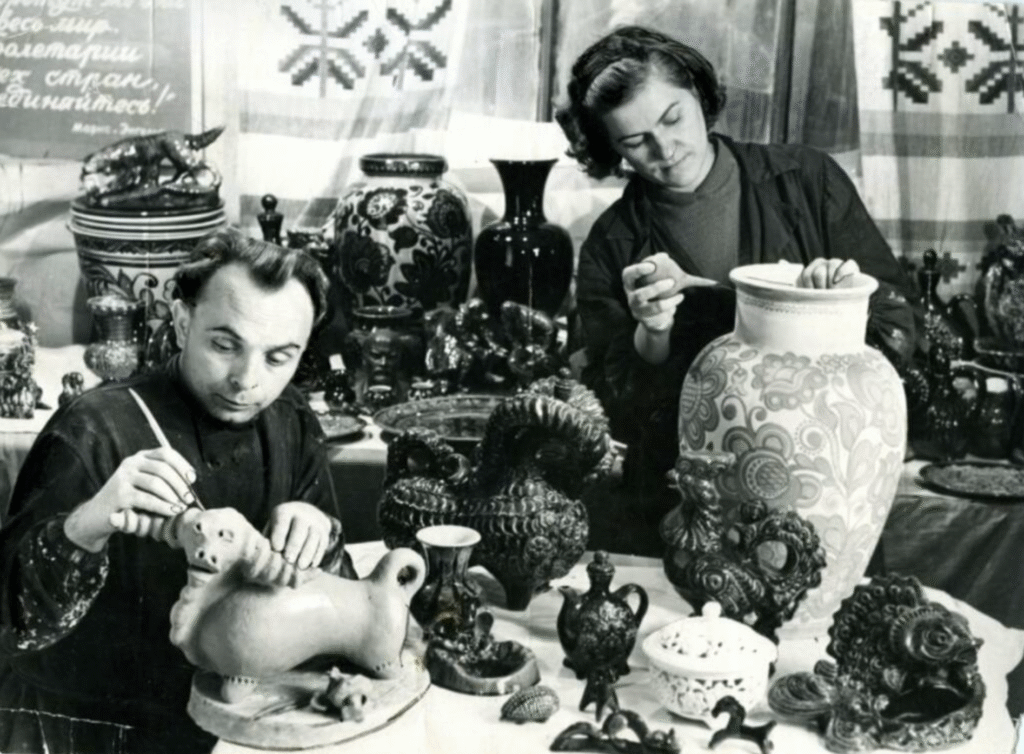
After graduating, Valerii and Nadiia joined the Vasylkiv Majolica Factory. They worked as artists and created a lot of majolica items like decorative tableware, gift sets, souvenirs and small-form sculptures. Nadiia Yukhymivna and Valerii Semenovych boldly reinterpreted the traditional floral patterns. Their works introduced strict functional shapes and restraint in decorative elements. From the mid-1960s, the Protorievs’ artistic manner evolved and eventually formed the so-called “Protoriev” style.
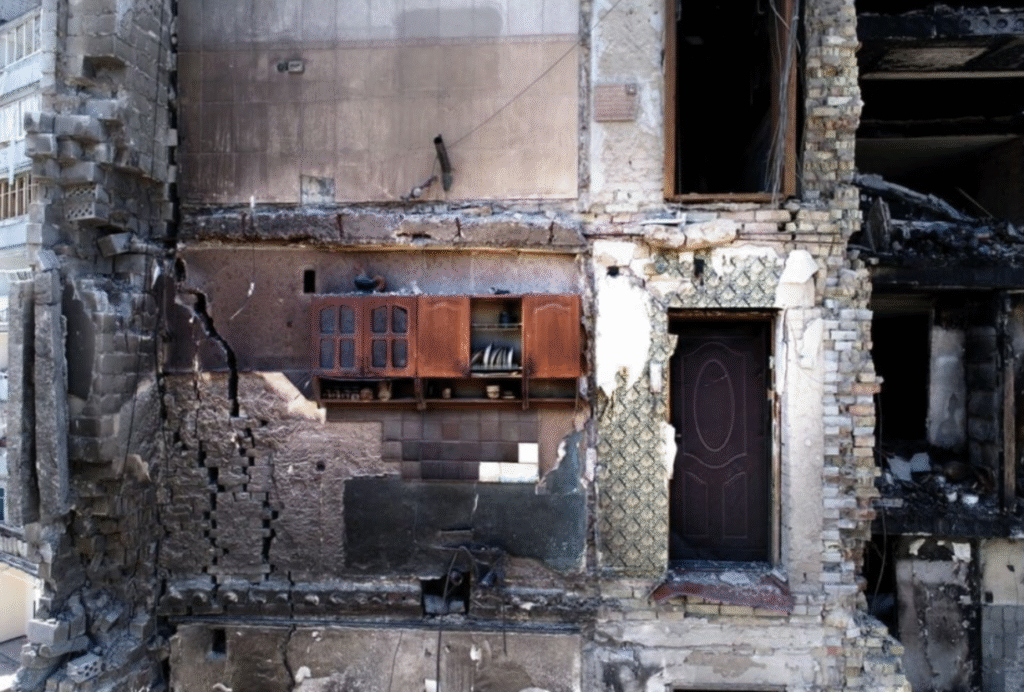
Valerii Semenovych is the author of the Vasylkiv Rooster. Later, based on his design, factory craftsmen began serial production of the roosters, and one of them survived the bombing of the village of Borodianka in the Kyiv Region in March 2022.
Manufacturing Technology
Clay has been the most widespread and the cheapest material from the beginning of human civilization to the present day. It was always a valuable skill to make something from clay; whereas once it was a necessity, today ceramic pieces are produced mostly for decorative purposes.
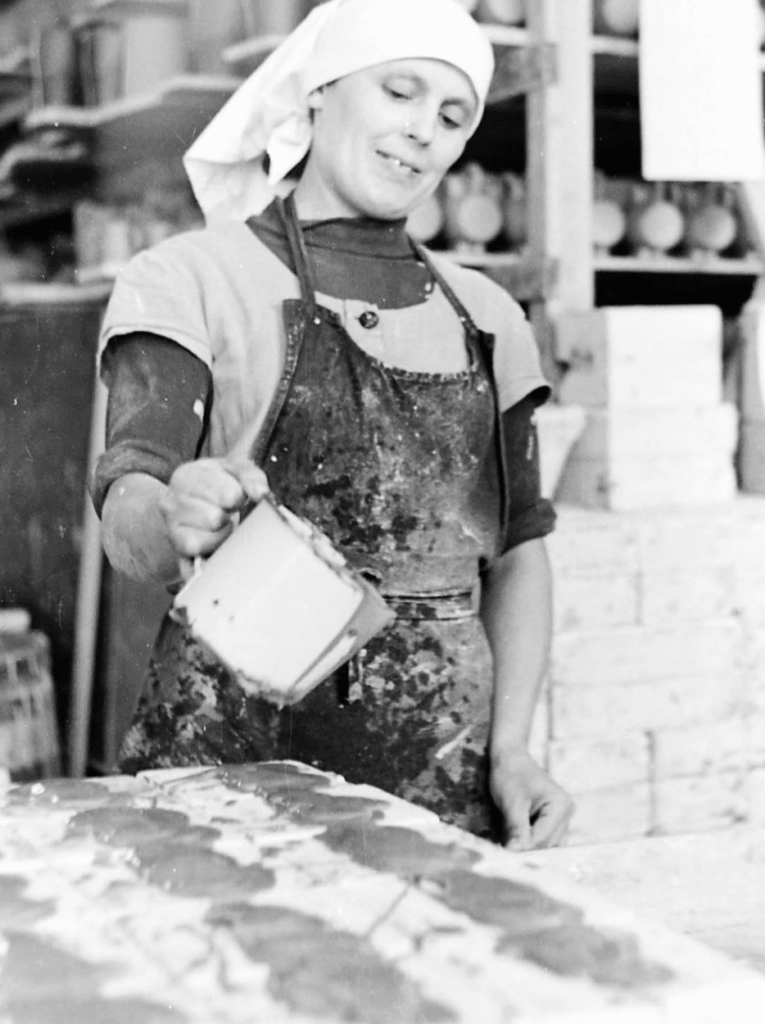
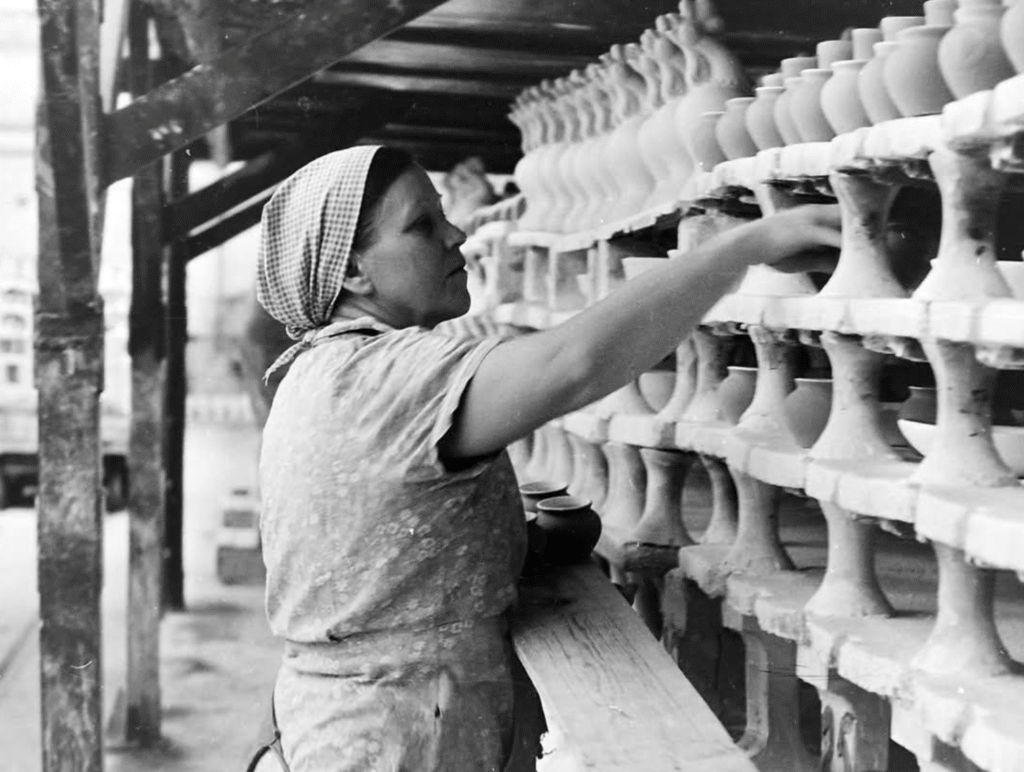
The Vasylkiv Majolica Factory’s Rooster was made using a molding method. The slip, a mixture of water and clay, is poured into a two-part plaster mold. The next stage is drying and it is very critical: any inaccuracies result in defects (warping, cracking). The goal of this process is to evaporate moisture from the surface of the piece.
The next stage is firing. During this stage, the piece comes to a stone-like state, gaining strength and stability, and its shape is permanently set.
Then comes glazing. Glaze is a glassy coating applied in a thin layer. Glazes can be transparent or colored. Color is achieved by adding various metal oxides or pigments to a clear glaze.
At the Vasylkiv Majolica Factory, the glaze included additions of metal oxides such as:
- To achieve a brown color — kaolin, titanium oxide, and pigment No.1968.
- Light brown — kaolin and iron oxide.
- Gray-green — kaolin, titanium oxide, iron oxide, manganese oxide; to obtain a lighter shade copper oxide was also added.
- Manganese oxide; to achieve a lighter shade, copper oxide was also added.
- Brown-olive — kaolin, titanium oxide, iron oxide, copper oxide.
- Soft gray-green — kaolin, titanium oxide, copper oxide, iron oxide, tin oxide.
At the final stage the object was dipped into glaze so it flowed down by its own, creating unique blends of colors and patterns. Thus, it’s hard to find two completely identical roosters.
Maker’s Marks
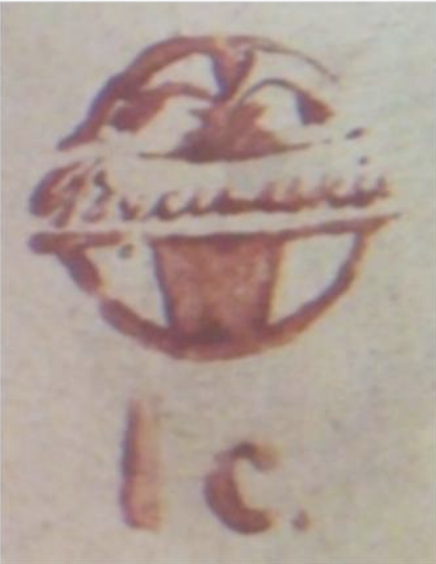
The Vasylkiv Majolica Factory rooster was being produced in the 1960s–1980s. These conclusions can be made by the maker’s marks on it.
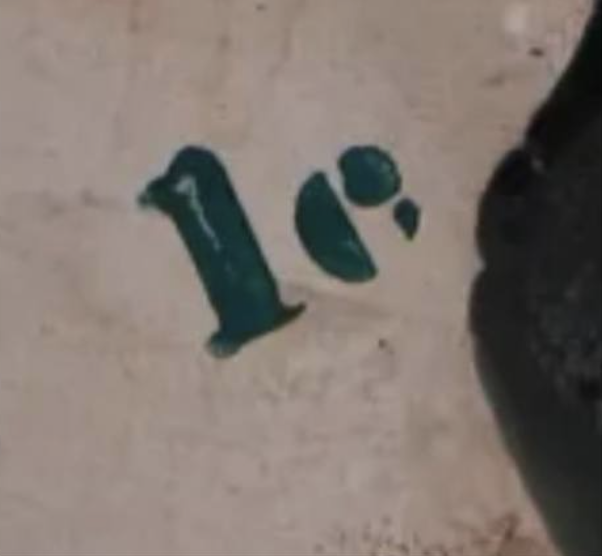
Starting in 1955, the Vasylkiv Majolica Factory used a painted (inked) mark on its products. It depicted a stylized jug with the name “Vasylkiv” in the center; below there was a grade mark: “I”, “II”, or “III.” This mark was used until 1963.
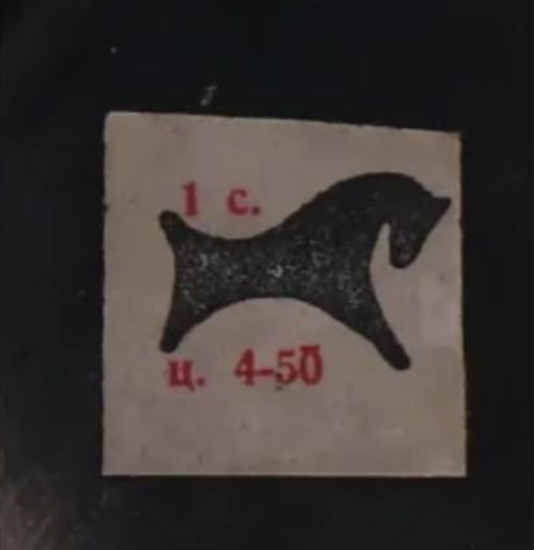
From 1963 to 1974, instead of a painted mark, they used a paper label. It showed a stylized little horse, and separate stamps indicated the grade and the price. A first-grade item cost 4–50, second grade 3–85, and third grade 3–40. There are, however, pieces where this paper label was used after 1974 for a short period. Just an inked stamp with the grade number inside a rectangle (or without) is also known.
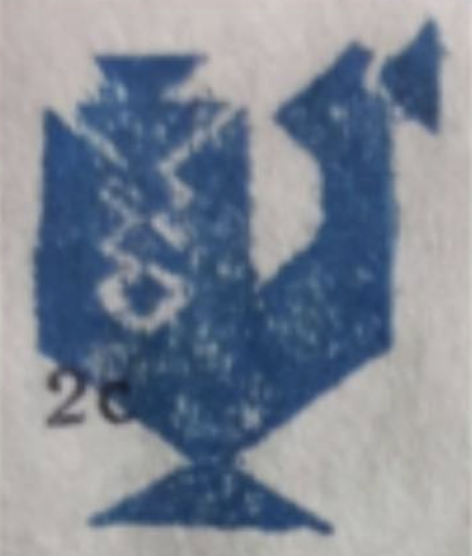
On October 24th, 1974, a trademark—a stylized bird—was registered, and thereafter the Vasylkiv Majolica Factory, which was a part of Ukrkhudozhprom, began using a paper label depicting the stylized bird. The label also carried the grade and price, though the price was later removed.
In the beginning, there was only one color variation of the bird — black. Later, the bird’s color depended on the grade: 1st grade – red, 2nd grade – blue, and 3rd grade — green. This paper label was used approximately until 1998, when bankruptcy proceedings were initiated against the Vasylkiv Majolica Factory.

Symbol & Meaning
Symbols play a very important role in shaping our identity, culture, and collective memory. They can take many forms—abstract, concrete, everyday, or sacred—but their essence is always tied to deep meaning, deeper than the visible image alone. Over time, certain historical objects or artifacts can acquire symbolic significance through events that change the course of history. Major historical events give rise to new symbols that become part of a nation’s cultural code.
On April 2, 2022, the Ministry of Defense of Ukraine officially announced that the Kyiv Region was liberated from Russian troops. On April 3, journalists were allowed to enter the village of Borodianka. One of them was Yelyzaveta Servatynska, who noticed two destroyed buildings. She saw a kitchen cabinet hanging on a destroyed wall, completely intact. Struck by this, she photographed it and shared the image. Later, in this photo, the rooster was noticed. It survived the bombing and was also completely intact on that kitchen cabinet. People began to admire the resilience of the ceramic, such a fragile object. The photo spread around the world and inspired many new touching images. Since then, it has become a symbol of resilience in Russia’s war against Ukraine.
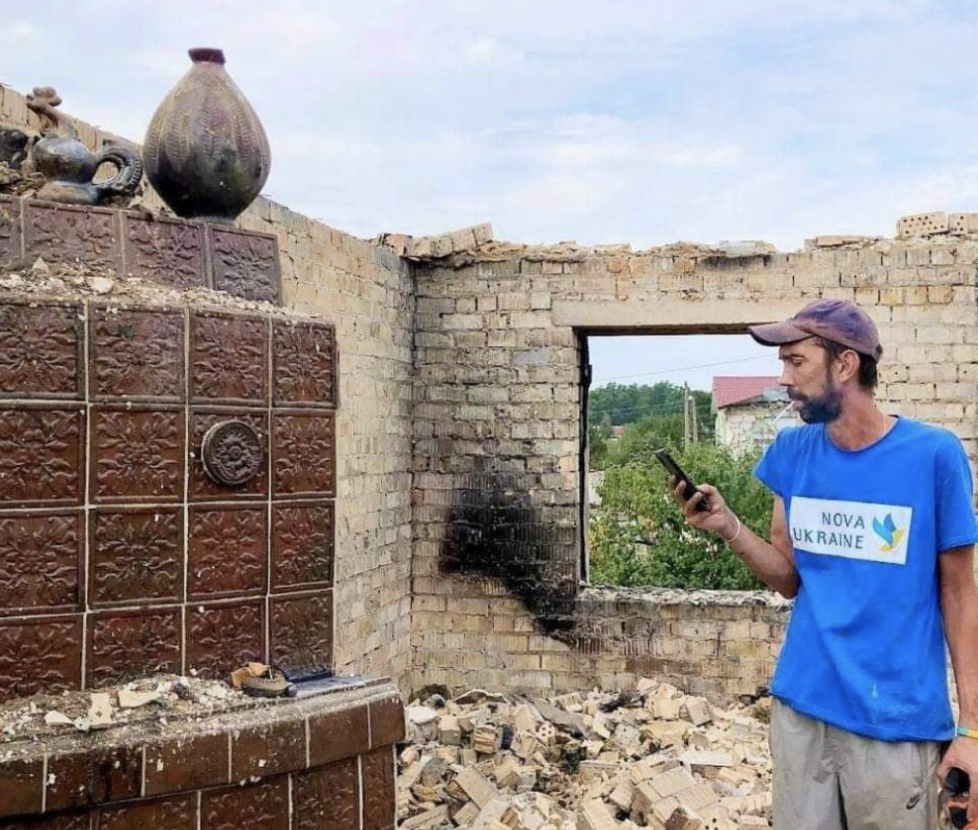
Later, volunteers found another surviving rooster in the village of Moshchun. On the stove of a completely destroyed house, the delicate ceramic piece withstood the destruction once again.
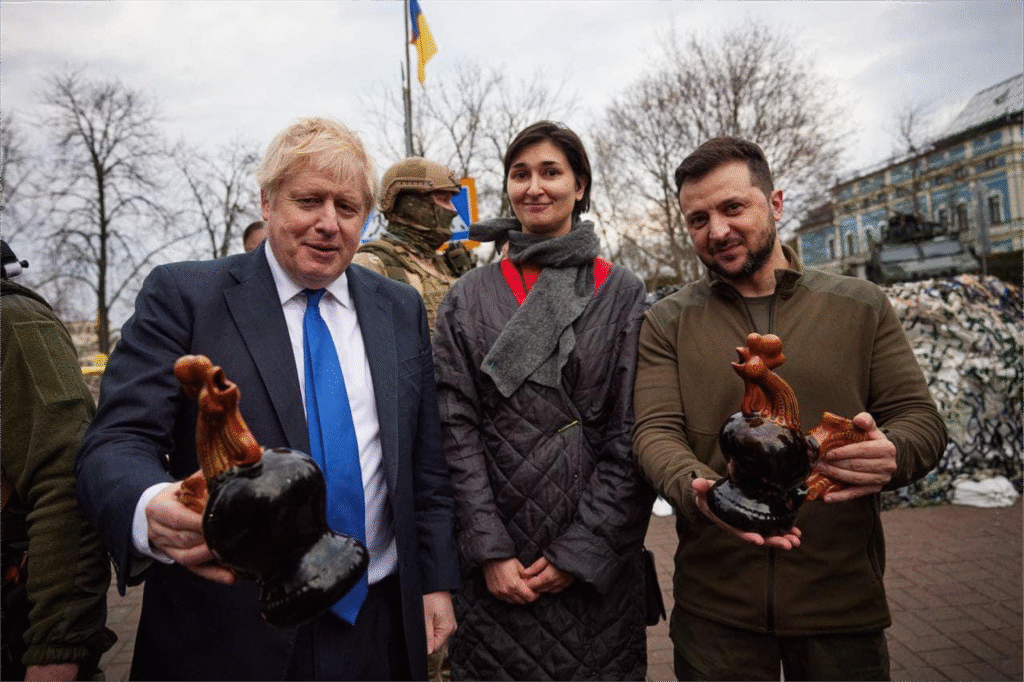
On April 9, 2022, the Prime Minister of the United Kingdom, Boris Johnson, arrived in Ukraine on an official visit. As he and the President of Ukraine, Volodymyr Zelenskyy, were walking along Liuteranska Street in Kyiv, Ukrainian artist Valeriia Polianskova saw them and decided to present them with the same Vasylkiv roosters, which had already become an embodiment of the Ukrainian people’s resilience and steadfastness.
This spontaneous inner impulse and coincidence played a very important role in establishing this symbol, because just a few days later, photos of Volodymyr Zelenskyy, Boris Johnson, and Valeriia together with the Vasylkiv roosters appeared on the pages of major international newspapers. This became a reminder to all Ukrainians—and to the world as a whole—that we are unbreakable despite every attempt to break us.
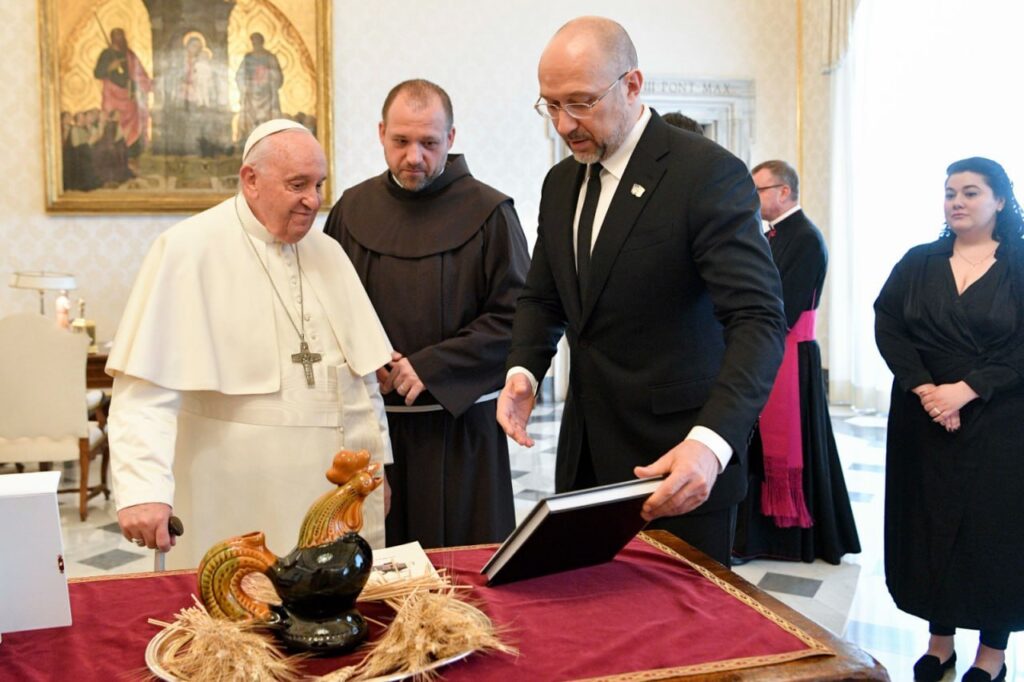
Thus, the Vasylkiv rooster became not only a piece of folk art, but also a silent witness to tragedy and, at the same time, a living symbol of the resilience and steadfastness of Ukrainians.